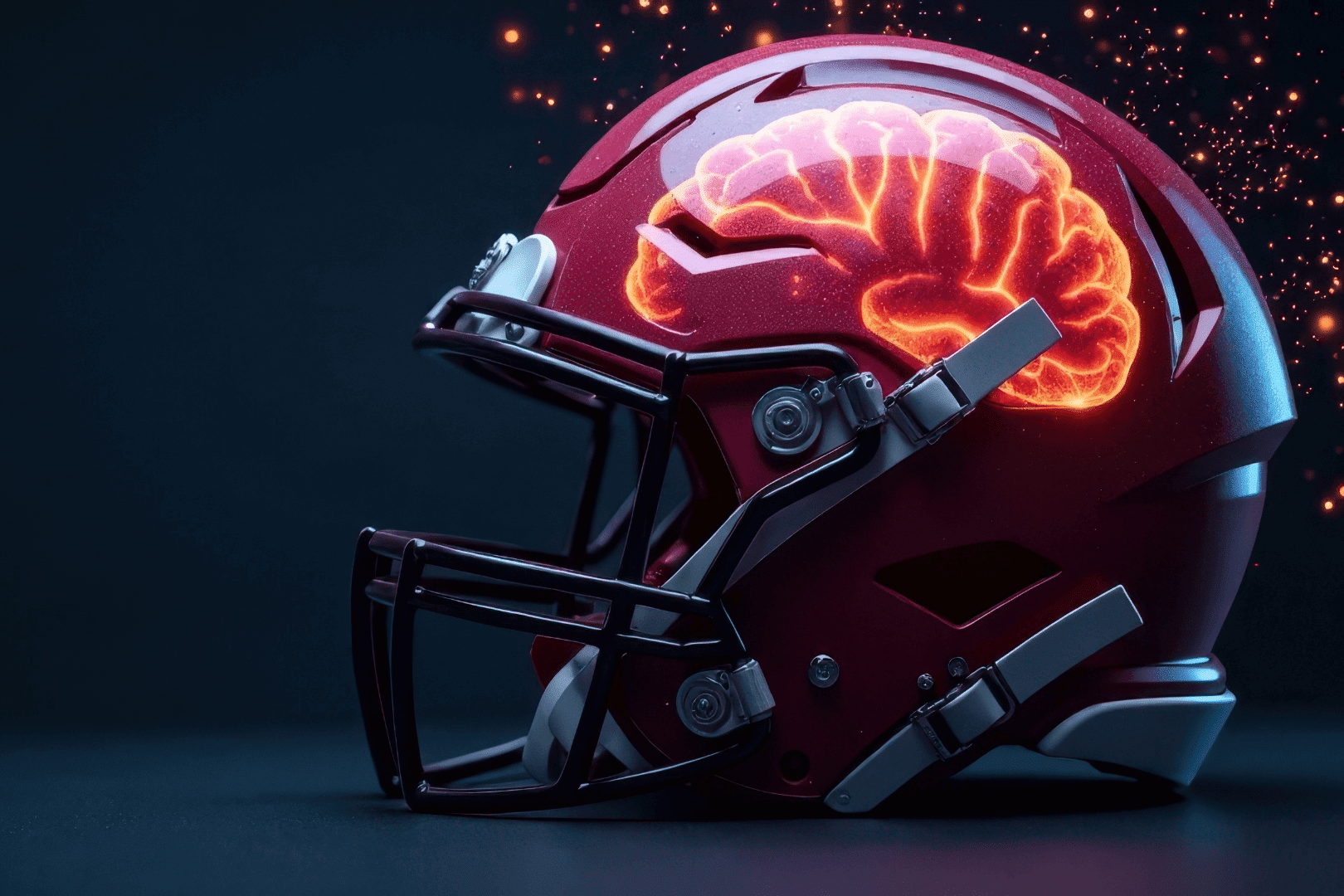
A concussion is the brain’s response to injury, commonly from car accidents, falls, work accidents, and sports. Concussions can lead to frustrating symptoms that can interfere with daily function. While most concussions resolve within a few weeks, in some cases, they can cause persistent symptoms. This article aims to explain the basics of concussions, recognize the symptoms, and provide guidance and expectations for the recovery process.
Understanding Concussion: How It Affects the Brain
The brain is suspended and cushioned inside the skull by specialized connective tissues called meninges. It is further protected by a liquid called cerebrospinal fluid. During a significant head impact, the brain can collide with the skull, which is known as an “acceleration-deceleration” injury.
The Physiology of an Acceleration-Deceleration Injury
The acceleration-deceleration injury mechanism is related to the change in the velocity of the head. This can happen when a moving object hits a stationary head (acceleration) or when a moving head hits a stationary object (deceleration). One specific type of acceleration-deceleration injury that is often taught to students is a coup-countercoup injury, where the brain is thrown forward and strikes the inside of the skull (coup), and then rebounds and strikes the opposite side of the brain(contrecoup).
Concussions can cause brain bruising (known as a contusion) and other structural changes, most early symptoms result from changes in brain function, not structural damage. The forces that cause the brain to shift in the skull stretch the nerves in your brain, triggering inflammation, swelling and release of chemical signals. These cause your brain to burn more energy in an effort to restore normal function.
Concussion Symptoms: What to Look For
Diagnosis of a concussion relies on the presence of one or more characteristic symptoms. A common myth is that you need to “pass out” to have a concussion. This is not true. A concussion can result from any significant head injury, regardless of whether you lose consciousness.
Common symptoms after a head injury with or without loss of consciousness can include:
- Memory loss and confusion (most common)
- Headache
- Dizziness
- Nausea and vomiting
- Difficulty balancing and walking
- Difficulty with focus
- Mood and behavior changes
- Difficulty sleeping or excessive fatigue
- Light and sound sensitivity
- Vacant stare
- Delayed verbal response
Not all head impacts cause concussions, although these symptoms can sometimes result from seemingly minor injuries. Being aware of them and monitoring their severity can help determine if seeking medical care is warranted.
When to Seek Urgent Medical Care For Concussion: Red Flag Symptoms
The following features are associated with a higher risk of more serious injury, compared with an uncomplicated concussion that is likely to resolve on its own. These are especially serious when the person is 60 years or older, or when the person is taking blood thinning medications due to increased risk of bleeding in the brain.
- Limb weakness or tingling/burning in an arm or legs
- Vision loss or double vision (not just “blurred”)
- Abnormally large, small, or asymmetrical pupils
- Seizures (occur in less than 5% of concussions)
- Loss of consciousness greater than 1 minute
- Persistent alteration in mental status
- Skull fracture
- More than 2 episodes of vomiting
- Amnesia extending beyond 30 minutes before the injury
- Severe or increasing headache
- Increasing restless, agitated or combative behavior
- Neck pain or tenderness
If someone is experiencing any of these symptoms, seek immediate, urgent medical attention.
How Medical Professionals Diagnose a Concussion
A concussion can be diagnosed in a person after a significant head injury, who has neurological symptoms including confusion, memory loss, or others as described above, regardless of loss of consciousness. In addition to a neurological evaluation, you may see healthcare professionals use standardized exams to evaluate for concussion.
The Role of Standardized Exams: The SCAT6
The Sport Concussion Assessment Tool 6 (SCAT6) is very commonly used for assessment of potential on-field concussions in the acute setting. The SCAT6 evaluates patient history and risk factors, red flag signs, symptoms of concussion, and examines level of consciousness, the cervical spine (neck), coordination, eye movement, memory, There are several other standardized examinations used by healthcare professionals that are outside the scope of this article.
Concussion Recovery: The Modern Approach to Treatment
Most routine concussions without any concerning red flag signs can be managed with outpatient observation and symptomatic treatment. Follow-up attention should be sought if any new red flag symptoms develop later on.
Recovery Timeline: What to Expect
If there are no complications, people tend to experience the most significant symptoms for 7–10 days after injury, with most symptoms completely resolving by 1–3 months after injury. Some people experience symptoms longer than 3 months, known as “persistent post-concussion syndrome”. There are several important considerations during this period.
The Importance of “Relative Rest” vs. Absolute Rest
Previous recommendations for concussion recovery involved long periods of “absolute” rest. Unfortunately, prolonged rest turned out to be associated with increased symptoms after concussion. As a result, we currently suggest a period of 24 to 48 hours of “relative” rest after an uncomplicated concussion.
Rather than “absolute” rest, the goal of this relative rest period is to maintain as much of a person’s regular activities of daily life as possible without causing significant worsening of their symptoms. While short-term modifications may be necessary, maintaining activity levels and decreasing screen time is beneficial, especially during the first 48 hours after injury. If activity must be reduced, rest should not lead to an increase in screen time. As long as it does not cause significant worsening of symptoms, light aerobic activity such as walking can safely be started within the relative rest period, and will likely help with recovery. While people vary in their response to napping, minimizing daytime naps may increase the chances of getting sufficient quantity and quality of sleep at night.
Preventing Re-Injury During Recovery and Supportive Measures
Avoid activities with risk for head impact and another concussion. A second injury during healing from the initial injury can lead to more serious brain injury.
Avoid the use of other substances such as alcohol and cannabis during recovery. Depending upon someone’s medical history, oral pain medicines like acetaminophen or non-steroidal anti-inflammatories can be used within recommended dosing guidelines as needed. While significant dehydration is not common in general, maintaining adequate hydration is important for brain function as well.
Return to Play: A Phased Guide for Athletes
Recovery from many injuries starts with rest or modified activity, followed by imposing gradually increasing demands while monitoring symptoms, and then proceeds to recovery where function continues to improve. Recovery is best accomplished with the guidance of qualified clinicians, but a degree of self-management is often necessary, and the steps below provide a practical framework.
This sample progression imagines a mild concussion for a participant in a contact sport, where returning to normal activity levels in approximately one week might be appropriate. There are seven stages. After the initial 24–48 hour period of stage one, subsequent stages should last a minimum of 24 hours. After each stage, self-assessment is required to determine how well the advancing activity levels were tolerated.
If increased activity exacerbates symptoms for greater than 1 hour, OR if medications are needed to treat the severity of symptoms, do not proceed to the next stage and consider reducing the intensity of activity.
Stage 1: Relative Rest and Return to Non-Sport Daily Activity
The goal of this phase is to allow the brain to recover and to avoid exacerbating symptoms for 24 to 48 hours after the injury. Engaging in light general activity while avoiding excess strain is fine, with walks being preferred. Rest may be required if subjective symptoms are worse than 7/10. Limiting screen time is recommended.
Stage 2: Light Aerobic Activity
Introduce more deliberate exercise with steady state aerobic exercises such as faster walking, swimming, or stationary bike as options, among others. Heart rate should be kept below 55% of maximum.
Stage 3: Moderate Aerobic Activity & Light Resistance Training
Gradually increase exercise intensity and complexity. Heart rate should be kept below 70% of maximum. This is also the time to resume light resistance training; intensity should be limited by tolerance and symptoms. Medical clearance should be obtained prior to progression to Stage 4 if the increase in sport-specific training involves risk of head impact.
Stage 4: Sport-Specific Exercise
Aerobic activity can be progressed based on tolerance into higher intensity ranges. Some lower-intensity sport-specific exercises and conditioning drills can be reintroduced, as long as head impacts are avoided. Performing individual drills outside of the team environment can minimize the risk of accidental impacts.
Stage 5: Non-Contact Practice
The intensity of sport-specific and ball handling drills in the team environment can be increased along with more demanding coordination tasks. More intense conditioning can be pursued, although impacts and other jarring contacts should still be avoided. Strength training and aerobic exercise can be resumed at previous intensities as tolerated.
Stage 6: Full-Contact Practice
Before resuming full-contact practice, consulting with a clinician to get medical clearance is advised. If symptoms allow, normal practice, including contact, can start again.
Stage 7: Return to Play
At this point, symptoms should have dissipated to the point that largely unrestricted functioning, including participation in competition is appropriate. Some continued caution is warranted to avoid re-injury.
Complications and After-Effects of Concussions
Re-Injury Risk
One of the most common concerns after a concussion is suffering another one. Premature return to play in athletes increases risk of re-injury. This most commonly happens within the first 7–10 days of the initial insult. Those who participate in contact sports require particular caution, since risk increases with each subsequent concussion. For example, 1 in 15 college football athletes who experienced their first concussion had a second concussion during the same season. A history of three concussions triples your risk of having another concussion in the future.
Repeated Head Impacts and CTE
While we do not have a clear consensus around the condition known as “chronic traumatic encephalopathy” (CTE), a neurodegenerative disease, we do observe that repeated concussions can lead to cognitive impairment, psychiatric symptoms, increased risk of dementia, and disorders of movement, gait and speech. This most commonly happens in military personnel and athletes participating in contact sports.
Post-Concussion Syndrome (PCS)
Longer-lasting conditions such as “Post-Concussive syndrome” (PCS) or “Symptoms Persisting After Concussion” are a risk for a minority of people injured: while over 30% of those who experience a concussion will experience lingering symptoms beyond 1 month, “Post-concussive syndrome” specifically describes symptoms lasting more than three months after the initial injury. Further, about 15% of patients who develop Post Concussive Syndrome experience symptoms lasting beyond one year. The most common symptoms include headaches, sleep disturbances, dizziness, fatigue, irritability, anxiety, forgetfulness, noise sensitivity, but may include other symptoms as well.
Persistent symptoms beyond 1 month should be evaluated by a physician, and often require brain MRI scans and/or neuropsychological testing. Treatment depends on symptoms and the results of medical evaluation. Specific medications and psychotherapy can target symptoms such as headache, mood and sleep disturbances. Education and reassurance are essential, given that these effects are common and people can still have a good prognosis for recovery.
Concussion Myths and Unproven Treatments
Before considering treatments that lack strong supporting evidence, first prioritize the best practices outlined above. This involves adequate high-quality sleep, eating a health-promoting diet, maintaining adequate hydration, modifying physical and cognitive stress based on tolerance, and seeking expert medical care. Other proposed treatments exist, and many of them are best avoided.
The Harm of Prolonged Rest
Medical practitioners who are out of date with current evidence may suggest prolonged or absolute rest. Prolonged rest beyond 24 to 48 hours should be avoided unless absolutely necessary for symptom control, as longer rest periods lead to worse symptom intensity and duration.
Treatments Lacking Evidence (Hyperbaric Oxygen, Neurofeedback, Blue-Light Lenses)
The Internet provides a variety of recommendations for concussion recovery. Some may have shown small benefits in single studies, but often lack more robust, reliable evidence.
Hyperbaric oxygen therapy research is inconsistent and filled with significant flaws and biases. These treatments often cost thousands of dollars, and the current research does not show substantial, reliable evidence of benefit in recovery.
Neurofeedback and Transcranial Magnetic Stimulation are being studied for reducing post-concussive headache and depression; however, this is another expensive treatment ($300–500 per session) that has not shown consistent benefit, and cannot be strongly recommended to facilitate recovery.
Blue-light blocking lenses have not been studied for concussion recovery, but initial studies show no benefit on visual fatigue scores in otherwise healthy individuals, and are unlikely to provide a substantial benefit in recovery.
Supplements (Creatine, Electrolytes)
Creatine has not been explicitly studied for concussion recovery. Currently, any evidence of benefit in this context is based on the extrapolation of mechanistic data or indirect outcomes from smaller studies. While creatine has established benefits in many other contexts, it has not yet been convincingly shown to be of benefit for concussions.
Electrolyte supplementation (including sodium, potassium, calcium, magnesium or phosphate) has not shown clear benefits on concussion recovery, unless you are deficient or struggle to meet your daily nutrient needs through regular consumption.
Key Takeaways on Concussion Recovery
A concussion is a functional brain injury that can result from any significant head impact, even without a loss of consciousness. While common symptoms like headaches, dizziness, and confusion often resolve within weeks , it is critical to watch for “red flag” symptoms that require immediate medical attention. Modern recovery emphasizes a 24 to 48-hour period of “relative rest” rather than prolonged rest, which can actually worsen symptoms. Following this initial period, a gradual, staged return to daily life and exercise is the cornerstone of successful recovery , prioritizing the prevention of re-injury and avoiding unproven treatments.
Edited by Derek Miles, DPT, Thomas Campitelli, Austin Baraki, MD, FACP
References
- Ainsley Dean PJ, Arikan G, Opitz B, Sterr A. Potential for use of creatine supplementation following mild traumatic brain injury. Concussion. 2017 Mar 21;2(2):CNC34. doi: 10.2217/cnc-2016-0016. PMID: 30202575; PMCID: PMC6094347.
- Centers for Disease Control and Prevention (CDC). Returning to Sports [Internet]. HEADS UP; 2025 Sept 15. Available from: https://www.cdc.gov/heads-up/guidelines/returning-to-sports.html
- Corrigan JD, Selassie AW, Orman JA. Traumatic brain injury: epidemiology, classification, and pathophysiology [UpToDate online]. UpToDate; last updated May 13, 2024. Accessed Oct 20, 2025. https://www.uptodate.com/contents/traumatic-brain-injury-epidemiology-classification-and-pathophysiology?search=concussion&topicRef=4828&source=see_link
- Echemendia RJ, Brett BL, Broglio SP, Davis GA, Giza CC, Guskiewicz KM, Harmon KG, Herring SA, Howell DR, Master CL, McCrea M, Naidu D, Patricios JS, Putukian M, Walton SR, Schneider KJ, Burma JS, Bruce JM. Sport Concussion Assessment Tool™-6 (SCAT6). Br J Sports Med. 2023;57(11):622-631. doi:10.1136/bjsports-2023-107036.
- Evans RW, Whitlow CT. Acute mild traumatic brain injury (concussion) in adults [UpToDate online]. UpToDate; last updated Feb 22 2022. Accessed Oct 20 2025. https://www.uptodate.com/contents/acute-mild-traumatic-brain-injury-concussion-in-adults (UpToDate)
- Evans RW, Furman JM. Postconcussion syndrome [UpToDate online]. UpToDate; last updated [accessed Oct 20 2025]. Available at: https://www.uptodate.com/contents/postconcussion-syndrome?search=postconcussion%20syndrome&source=search_result&selectedTitle=1~21&usage_type=default&display_rank=1
- GBD 2016 Traumatic Brain Injury and Spinal Cord Injury Collaborators. Global, regional, and national burden of traumatic brain injury and spinal cord injury, 1990-2016: a systematic analysis for the Global Burden of Disease Study 2016. Lancet Neurol. 2019 Jan;18(1):56-87. doi: 10.1016/S1474-4422(18)30415-0. Epub 2018 Nov 26. Erratum in: Lancet Neurol. 2021 Dec;20(12):e7. doi: 10.1016/S1474-4422(21)00383-5. PMID: 30497965; PMCID: PMC6291456.
- Harch PG. Systematic review and dosage analysis: hyperbaric oxygen therapy efficacy in mild traumatic brain injury persistent postconcussion syndrome. Front Neurol. 2022;13:815056. doi:10.3389/fneur.2022.815056 (frontiersin.org)
- Krainin BM, Seehusen CN, Smulligan KL, Wingerson MJ, Wilson JC, Howell DR. Symptom and clinical recovery outcomes for pediatric concussion following early physical activity. J Neurosurg Pediatr. 2021 Sep 24;28(6):623-630. doi: 10.3171/2021.6.PEDS21264. PMID: 34560641.
- Macnow T, Curran T, Tolliday C, Martin K, McCarthy M, Ayturk D, Babu KM, Mannix R. Effect of Screen Time on Recovery From Concussion: A Randomized Clinical Trial. JAMA Pediatr. 2021 Nov 1;175(11):1124-1131. doi: 10.1001/jamapediatrics.2021.2782. PMID: 34491285; PMCID: PMC8424526.
- McMillan P, Makrai E, Lawrenson JG, Hull CC, Downie LE. Blue-light filtering spectacle lenses for visual performance, sleep, and macular health in adults. Cochrane Database Syst Rev. 2023 Aug 18;8(8):CD013244. doi: 10.1002/14651858.CD013244.pub2. PMID: 37593770; PMCID: PMC10436683.
- Mollica A, Safavifar F, Fralick M, Giacobbe P, Lipsman N, Burke MJ. Transcranial magnetic stimulation for the treatment of concussion: a systematic review. Neuromodulation. 2021;24(5):803-812. doi:10.1111/ner.13319 (PubMed)
- Patricios JS, Schneider KJ, Dvorák J, et al. Consensus statement on concussion in sport: the 6th International Conference on Concussion in Sport–Amsterdam, October 2022. Br J Sports Med. 2023;57(11):695-711. doi:10.1136/bjsports-2023-106898 (bjsm.bmj.com)Singh S, Keller PR, Busija L,
- Tran V, Flores J, Sheldon M, Pena C, Nugent K. Fluid and Electrolyte Disorders in Traumatic Brain Injury: Clinical Implications and Management Strategies. J Clin Med. 2025 Jan 24;14(3):756. doi: 10.3390/jcm14030756. PMID: 39941427; PMCID: PMC11818519.
- Wolf C, Fast K. “Put Me Back In, Coach!” Concussion and Return to Play. Mo Med. 2017 Jan-Feb;114(1):36-39. PMID: 30233098; PMCID: PMC6143567.