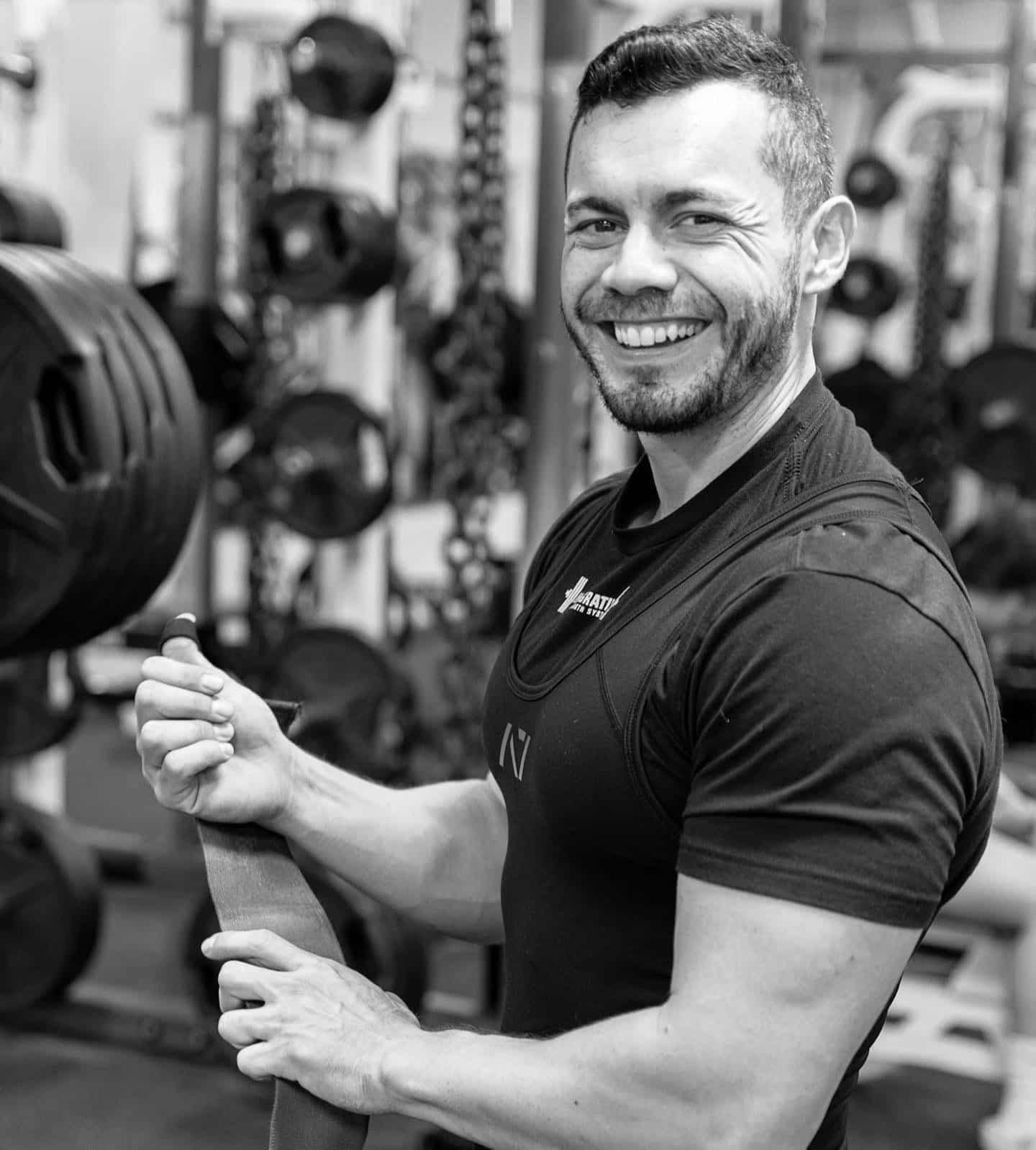
If you’re a fitness enthusiast then you have, at one point or another, daydreamed about leaving your job and becoming a full-time coach or personal trainer. Maybe you’ve even thought about opening your own gym.
For some, the idea of pursuing a career in fitness is so appealing that they’ll actually take action.
I’m one of those people. A little over five years ago I left a comfortable accounting career to open my own gym and become a full-time gym owner and coach.
Changing careers is a big decision requiring a lot of thought and consideration. There are certain questions I wish I had been asked before making the switch; had someone asked me these tough questions, I would have felt better prepared early on.
In this article, I’m going to present a series of questions to consider before deciding whether the fitness industry is right for you. It’s important to be honest with yourself when answering these questions. A career as a fitness professional, whether full- or part-time, can be very demanding. You will be in a position where your actions will have a direct impact on the health and wellbeing of another person. This is a big responsibility and should not be taken lightly.
If you’re planning on changing careers to become a fitness professional, then you’ll have to prepare yourself for the possibility that on paper, the switch initially won’t make sense. But if you’re like me, your passion will push you to take the risk anyway. If that’s the case, at least you’ll be well-informed!
Note: For whatever reason, most veteran coaches abhor the term “personal trainer”, even if the bulk of their work is 1-on-1 with clients. We’ll use the term “coach” for the rest of the article, save for places we need to say “personal trainer” for the broader audience, but just know that for all intents and purposes, it’s just another name for a personal trainer.
Who Makes A Good Personal Trainer/Coach?
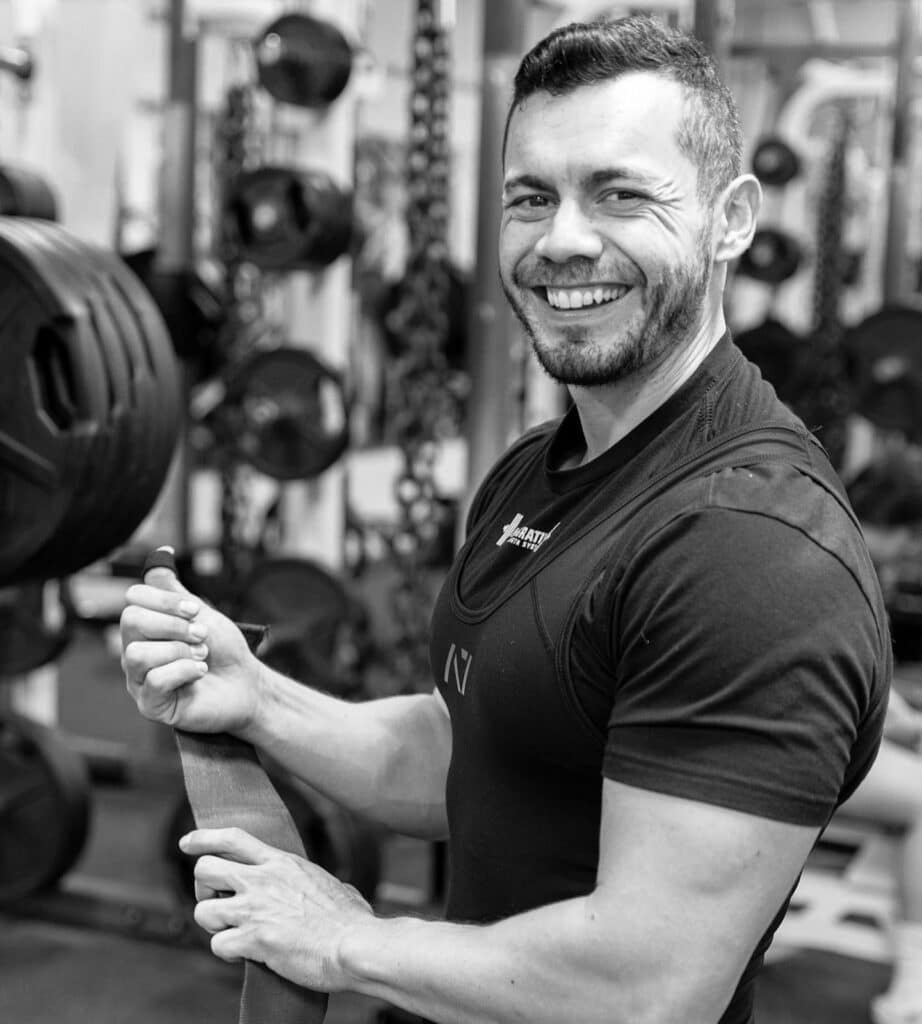
The best coaches I’ve worked with were passionate about TEACHING.
I’ve hired and trained seven different personal trainers since opening my gym. Of those seven, four were very passionate about fitness. If I’ve learned anything from those four hires it’s this: people who say they are “passionate about fitness” often make for poor coaches.
Don’t get me wrong — these people were fit, loved training, and they loved being in the gym. So, naturally, they thought that making “fitness” their job would be perfect. This turned out to be wrong. They all quit in less than six months and pivoted to entirely different industries.
The issue with people who are “passionate about fitness” is that they are passionate about THEIR OWN fitness. And there is nothing wrong with that — but it’s important to understand that being a coach isn’t about your fitness; it’s about the client’s progress, satisfaction, and happiness.
Based on my hiring experience, here are the questions you should ask yourself:
- Have I always considered a career as a teacher or instructor to be right for me?
- Are there instances in my life when I volunteered to teach or mentor others?
- How do I feel when I help an older person with technology?
That last one may sound like a joke, but is actually relevant. The answer to each of these questions will tell you something about yourself.
If you’ve never been keen on the idea of dedicating your life to teaching, training new employees, or tutoring others, you probably won’t enjoy coaching. Teaching, mentoring, tutoring, and educating are all fundamental aspects of coaching.
If you can’t think of any time in your life where you volunteered to help others learn for no reason other than you just wanted to, you probably won’t like being a coach. Much like school teachers, you typically don’t get into coaching just for the money. You have to be the kind of person who gains true fulfillment from teaching others how to do things, and then seeing them progress towards mastery. It can be a slow process that requires lots of patience, with the only payoff being that someone else got better.
If you find that your patience runs thin anytime you’re asked to help elderly family members learn how to use their smartphone, you probably won’t enjoy teaching someone to lift weights.
You’ll be amazed at how many people have zero body awareness or control. You’ll ask them to widen their stance, and they’ll bring their feet closer together instead. Tell them to lift their chest, and they’ll round their back instead. You’ll have clients performing triceps extensions and tell you they feel the exercise in their calves (true story!) You’ll work with a client for six months and they still won’t know the name of a single exercise, and require a demonstration and explanation every time. If that sounds frustrating to you… it certainly can be.
That’s why you need a high level of patience and empathy when coaching. You need to understand where each person is coming from, what each person deals with on a daily basis, and accept that exercise might simply be a chore for them. You need to accept and be proud that they acknowledge the importance of exercise and are investing in themselves by hiring you and showing up.
It’s the same empathy you need for the elderly family member who’s asking how to open Facebook on their smartphone. They are asking because they want to connect with friends and family. They are asking for help because the end result is important to them, and they feel as if they can’t do it alone.
Be honest with yourself regarding these questions. Changing careers is a huge decision, and if teaching others doesn’t give you a sense of fulfillment, and empathy towards people who are struggling to learn doesn’t come easily, then a coaching career may not be the right fit for you.
How Much Do Personal Trainers/Coaches Work?
Full-time coaches, who are self-employed, can expect to work an average of 60 to 80 hours a week. This fact is something I didn’t fully appreciate when I became a full-time coach.
Before I became a full-time coach, I was a Chief Financial Officer for a chain of restaurants. I was working about 40 hours a week in an office, and spending about 20 of those hours making memes. I had a salary of $90,000 per year before bonuses. I had weekends and holidays off, and could take up to 4 weeks of paid vacation every year.
When we talk about work/life balance … that was it.
So, imagine how overwhelmed I was when I made the switch to being a self-employed coach. I went from a cushy 9-5 to working 80-100 hours a week. No weekends. No days off. No vacations. Earning about $15,000 per year to start.
I definitely wasn’t ready for the number of hard hours I would be working, level of stress I would endure, and the constant grind to survive. But I had put my entire life savings into opening my gym. I had to keep going. I had no other option.
If I could go back, I would have asked myself this question:
“Are you willing to work as a Personal Trainer for 20-40 hours per week in ADDITION to your current full-time job?”
If the answer is “I can’t see myself working that much…” then you’re not ready to be a full-time coach.
How Much Do Personal Trainers/Coaches Make?
According to the most recent data from the U.S. Bureau of Labor and Statistics, the median annual salary for Exercise Trainers & Group Fitness Instructors is $40,510 with an average annual salary of $45,110.
Your income as a coach will be heavily influenced by a number of factors. Some relevant factors are:
- Average income of your area
- Distance from residential neighbourhoods
- Target demographic
- Training Specialty
- Years of experience
- Investment into marketing
- & Investment into Personal Development
The question I’ll offer for consideration is this: would you be able to live the life you want making $40-$50K per year?
This is important because struggling financially tends to lead to resentment towards clients, and ultimately burnout. I’ve known several coaches who opened their own gym and called it quits after 3 years because of the financial burden.
They believed that they could simply build a studio, and clients would flock to them because of their expertise. These coaches didn’t realize that in order to be successful in the fitness industry you must be an entrepreneur first, and a coach second.
With that in mind, many successful coaches who provide excellent services and have a good sense for business will make multiples more than the industry average.
How-To Build A Business As A Personal Trainer/Coach?
The most successful coaches are the ones who understand that coaching is a service, and clients are customers. Being a Coach means you’re self-employed. So, when you’re not actively working with clients, you need to be actively looking for clients. It’s a lot of work with a very low return on the time invested, and a lot of people ignoring you or telling you no.
For every 100 potential clients, 20 might respond to you. 8 or 9 will agree to meet you, 6 will actually show up, and two or three will hire you.
That’s about 50 “no’s” for every one “yes”. This can feel very discouraging, and it’s difficult not to feel like you failed a bunch before “getting lucky.” That brings us to the final question:
How do you view failure?
This question deals more with entrepreneurship than being a coach. However, it is probably the most important question so far. It’s important because most coaches are essentially self-employed.
Being self-employed means you will experience failure and losing, often on a daily basis. You’ll be told “no,” over and over again. You’ll question your self-worth. You’ll feel like when people say no to your services, they are saying you personally have no value.
Early on I took every “no” as a personal failure. My fixed mindset allowed all the “no’s” to wreak havoc on my self-confidence, as well as my mental and physical health. It’s taken a lot of work, but I’ve grown past that way of thinking.
Now I approach challenges with a more objective mindset. When things are going poorly, instead of complaining, I ask myself:
- What worked before?
- What’s not working now?
- What was I doing before that I’m not doing now?
- What’s in my control?
- What can I do today?
Once those questions are answered, I get to work. I’ll work until I can say “okay, I’ve addressed all the things in my control. I can’t worry anymore, now I just have to wait.”
You cannot define success purely in terms of how many people hire you, or how much money you are making. You have to view success as the act of putting in an honest effort instead of basing it on the outcomes.
What Certification Should I Pick To Be A Personal Trainer/Coach?
Most commercial gyms require that their coaches or personal trainers have a certification that is recognized by the National Commission for Certifying Agencies (NCCA), which is an accreditation body. Popular options include certifications from the National Academy of Sports Medicine (NASM), the American Council on Exercise (ACE), the National Strength and Conditioning Association (NSCA), the American College of Sports Medicine (ACSM), and the International Sports Sciences Association (ISSA).
I’ve interviewed dozens of personal trainers. I can tell you that none of these certifications prepared any of them for working with people. If you want to be the best coach you can be, then you must be willing to be coached.
You’ll have to invest the time and money into hiring more experienced coaches, working with them, learning from them, and understanding what the role of a coach is.
As I previously stated, the best coaches are passionate about teaching. So it’s very easy to have an experienced coach agree to mentor you. You’ll want to shadow them as they work with clients, learn about their methodology, and draw from their real world experiences.
The question to consider isn’t “which certification should I get?” The question you should be asking yourself is: am I willing to be coached?
For a deeper discussion on certifications, mentors, and learning to coach, see the panel YouTube video we recorded on the topic here.
How-To Pick A Good Personal Trainer/Coach?
The best coaches have a combination of extensive education and experience. Markers of education include both certifications and degrees, whereas gauging a coach’s personal and professional experience is not quite as straightforward. To get the most out of the client-coach relationship, you’ll want someone who has worked with lots of people that are like you in order to feel confident about your decision. To simplify, when it comes to choosing a coach, the majority of clients want to answer yes to one simple question: Do they seem trustworthy?
Different people will assess trustworthiness based on different criteria. Some will base it off of client reviews, others will look at certifications, some will base it on appearance or personal accomplishments, others will decide based on how you speak, and still others will make the decision based entirely on instinct. But, at the end of the day, they simply want to trust you.
Trust is the foundation of any positive relationship, whether it be personal or professional.
As Barbell Medicine coaches, we start the trust building process immediately. New clients can expect to have a virtual meeting with their coach within 24-48 hours after signing up for coaching services. From there clients can expect a custom training program that takes into account all the information shared during their initial call. We will then check-in and follow up with clients to ensure all questions about the program are answered, and that the clients are set up for a successful first week of training. We continue to cultivate trust by continually checking in and adjusting a client’s program to fit with their lifestyle, performance, and goals.
Clients should look for coaches who have well thought out systems and procedures in place. This ensures that they are working with a professional who can deliver on the services promised. The best coaches have a combination of education and experience
Take Home
Making the transition from Accountant to Coach has been the hardest thing I’ve ever done. But for me, it’s been worth it. I know it’s my calling because I love to teach and explain things. I’m genuinely happy when I see someone make small progress. It makes me feel good and fulfilled when my clients thank me for my patience.
I’m proud of how far I’ve come as an entrepreneur because of the long and grueling hours I spent early on.
Mostly, I’m grateful for the growth I’ve experienced as a person. The challenges of changing careers has made me a better husband, coach, friend, entrepreneur, and person.
And that’s where I’ll leave you. A few questions to contemplate, and to answer truthfully. I hope you found this article helpful, and if you would like to get some specific advice, feel free to email me: sal@barbellmedicine.com